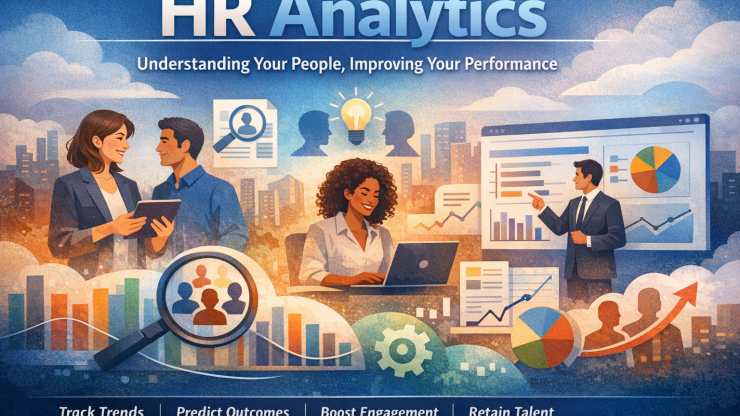
HR Analytics: A Smarter, More Human Way to Understand Your Workforce
-

Umair Durrani
-
Mar 27, 2026
-
40
So, What Exactly is HR Analytics?
Think of HR Analytics as a way of listening to your workforce through data.
It involves collecting and analyzing employee-related information—like performance, engagement, attendance, and turnover—to uncover patterns and insights. These insights help organizations make better decisions, not based on guesswork, but on real evidence.
Instead of asking, “Why are people leaving?” and making assumptions, HR Analytics helps you actually find the answer.
Why It Matters More Than Ever
People are at the heart of every organization. But without the right tools, it’s difficult to measure their true impact.
HR Analytics helps bridge that gap.
It allows companies to move from reactive decisions to proactive strategies—whether it’s improving employee satisfaction, reducing turnover, or building stronger teams.
More importantly, it helps organizations treat employees not just as resources, but as valuable contributors whose experiences and performance truly matter.
From Data to Real Understanding
One of the biggest strengths of HR Analytics is how it turns raw data into meaningful stories.
For example:
- High turnover isn’t just a number—it could signal deeper issues like poor management or lack of growth opportunities.
- Low engagement scores might reflect burnout, lack of recognition, or unclear expectations.
HR Analytics helps connect these dots.
It answers not just what is happening, but also why it’s happening—and most importantly, what can be done about it.
The Different Ways HR Analytics Works
Not all analytics are the same. Each type plays a different role in understanding your workforce:
- Descriptive Analytics shows you what has already happened
(e.g., how many employees left last year) - Diagnostic Analytics helps you understand why it happened
(e.g., identifying reasons behind employee exits) - Predictive Analytics looks ahead
(e.g., spotting employees who may be at risk of leaving) - Prescriptive Analytics suggests what you should do next
(e.g., strategies to improve retention or engagement)
Together, these create a complete picture—past, present, and future.
Measuring What Truly Matters
To evaluate human capital effectively, organizations rely on key HR metrics such as:
- Employee turnover
- Time and cost of hiring
- Engagement levels
- Absenteeism
- Training effectiveness
- Performance outcomes
But beyond the numbers, these metrics tell a deeper story about how employees feel, perform, and grow within the organization.
How HR Analytics Drives Organizational Performance
When used correctly, HR Analytics doesn’t just improve HR—it improves the entire business.
Better Hiring Decisions
Organizations can identify what makes a great hire and focus on candidates who are more likely to succeed.
Stronger Performance Management
Managers can recognize high performers, support struggling employees, and create fair evaluation systems.
Improved Retention
Instead of reacting to resignations, companies can act early and address the reasons people leave.
Smarter Workforce Planning
Leaders can anticipate future needs and ensure the right talent is in place at the right time.
Higher Employee Engagement
By understanding employee needs, organizations can create a workplace where people feel valued and motivated.
The Real Benefits
When organizations embrace HR Analytics, they begin to notice real changes:
- Decisions become more confident and less biased
- HR strategies align better with business goals
- Employees feel heard and understood
- Resources are used more efficiently
- Overall performance improves
It creates a workplace that is not just productive, but also people-focused.
But It’s Not Without Challenges
Like any transformation, adopting HR Analytics comes with its own hurdles:
- Data may be incomplete or inconsistent
- HR teams may lack analytical skills
- Employees may worry about data privacy
- There can be resistance to change
The key is to approach it thoughtfully—invest in the right tools, train your people, and build a culture that values data without losing the human touch.
Making HR Analytics Work
To get the best out of HR Analytics, organizations should:
- Start with clear goals
- Focus on meaningful data—not just more data
- Train HR teams to think analytically
- Ensure transparency and ethical data use
- Continuously learn and improve
Remember, the goal isn’t to replace human judgment—it’s to enhance it.
Looking Ahead
As technology continues to evolve, HR Analytics is becoming even more powerful. With AI and machine learning, organizations can now gain real-time insights and even personalize employee experiences.
But no matter how advanced the tools become, one thing remains constant:
HR Analytics is not about data replacing people—it’s about data helping us understand people better.
Final Thoughts
At its core, HR Analytics is about making smarter decisions while staying deeply connected to the human side of business.
Organizations that embrace it don’t just improve performance—they build stronger teams, create better workplaces, and prepare themselves for the future.
Because when you truly understand your people, everything else starts to fall into place.

Related Blog Posts




Popular Posts
-

-

-

-
 HR: The Backbone of the Company May 22, 2024
 -